Full Download Vein Pattern Recognition: A Privacy-Enhancing Biometric - Chuck Wilson file in ePub
Related searches:
2141 3711 2516 3638 2258 2061 4407 4628 1643 1863 2741
Nov 1, 2008 vein pattern is the network of blood vessels beneath person's skin. The idea using vein patterns as a form of biometric technology was first.
Finger vein recognition is based on images of human finger vein patterns beneath the skin's surface.
Palm vein recognition examines the unique patterns in your palm veins using a safe, near-infrared light source like that in a tv remote control.
After the preprocessing stage and binarization, the vein image is characterized by specific patterns.
Abstract—biometric identification systems based on the recognition of the hands vein pattern are better than the other systems such as fingerprint identification,.
Why can finger vein patterns be used for authentication? finger vein authentication can be applied to children? is there any effect on elderly people or the people.
Nov 14, 2017 the technology works by identifying the subcutaneous (beneath the skin) vein patterns in an individual's hand.
Individual authentication techniques are disclosed, which relate to a vein recognition based to biometric authentication system. Systems and methods to capture the subcutaneous vein pattern at the back of the palm and use it as the biometric identity of an individual are also disclosed.
Vein pattern recognition, also known as “vpr” for short, is the latest biometric technology to be developed and come out into the marketplace. Since the palm is considered to be just directly underneath the hand, it is also being used as a complement to hand geometry recognition as a multimodal security solution.
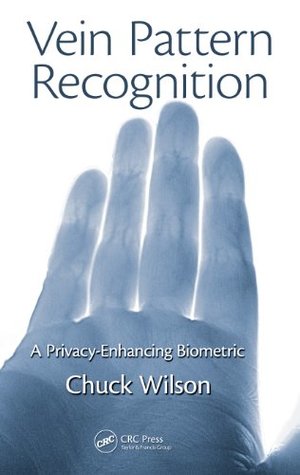
Vein pattern recognition: a privacy-enhancing biometric biometric technologies vary in capability, performance, and reliability. One of the most promising emerging technologies, vein pattern recognition (vpr), is said to be a tad more accurate than many other biometric methods, offers greater resistance to spoofing and focuses on people.
The objective of this paper is to build a distinct and a substitute to the contact-based systems.
Among others, hand vein patterns are proven to have all the features of a good biometric: universality, distinctively, collectability and permanence. However, due to the fact that most hand vein recognition systems use expensive sensors for imaging the vein patterns,.
Finger vein recognition is a method of biometric authentication that uses pattern- recognition techniques based on images of human finger vein patterns beneath.
Vein pattern recognition (vpr), also called vascular pattern recognition, is one of many available biometric authentication technologies. Vpr uses infrared light to create images of the blood vessels on various parts of a person's hand, fingers, or palm.
Vein authentication is proven to be the safest and most accurate method of based on the patterns of veins in one's finger or hand, vascular pattern recognition.
Therefore, vein thick- ness is not a stable pattern for recognition. So, the thinning operation is needed to ensure representation of veins objects that can correctly describe the main features like shape and connectivity.
Abstract—identification based on hand vein pattern is an interesting branch of biometric recognition that is enjoying increasingly attention among the researchers in the recent decade. However, despite the fact the most of the developed commercial systems for this purpose are expensive, their false acceptance ratios are not zero.
He envisioned the use of a watch that would recognise your unique wrist vein pattern to grant access to stored credentials.
Vein recognition systems based on the near infrared approach are exploiting differences in the light absorption properties of the de-oxygenated blood flowing in subcutaneous blood vessels and the surrounding tissue. Veins become visible, as seen in figure 1, as dark tubular structures.
2) safety: blood vessel patterns are hardwired underneath the skin at birth; they are hence much harder for intruders to forge.
Finger-veins, one of the most well known biometric, is a promising biometric pattern for personal identification and authentication in terms of its security and convenience. Finger vein has gained much attention among researchers to combine accuracy, universality and cost efficiency.
Vein pattern recognition is one of the newest biometric techniques researched today.
The vein pattern recognition technology works on the principle of identification of the subcutaneous vein patterns in the hand.
A biometric technology that authenticates users on the basis of vein pattern recognition rather than iris scans or fingerprint readers. The world’s first contactless vein authentication technology developed by fujitsu offers even more security and ease of use and overcomes previous problems related to security concerns.
Fujitsu has developed a contactless palm vein pattern authentication technology that uses vascular patterns as personal identification data.
Nov 10, 2014 personal recognition using palm–vein patterns has emerged as a promising alternative for human recognition because of its uniqueness,.
Vascular/vein pattern recognition (vpr) technology has been developed commercially by hitachi since 1997, in which infrared light absorbed by the haemoglobin in a subject's blood vessels is recorded (as dark patterns) by a ccd camera behind a transparent surface.
Vein pattern recognition uses this difference between deoxidised and oxygenated haemoglobin. Deoxidised haemoglobin absorbs infrared light, making the vein pattern visible if you use a scanner to illuminate it with infrared light.
Vein pattern recognition: a privacy-enhancing biometric provides a comprehensive and practical look at biometrics in general and at vein pattern recognition specifically. It discusses the emergence of this reliable but underutilized technology and evaluates its capabilities and benefits.
Palm vein pattern recognition uses harmless near infrared light (think tv remote) to capture the pattern of veins in your palm.
Keywords: biometric, vein pattern, multimodal, feature extraction, matching, fusion level, intelligent algorithms, soft computing.
Oct 10, 2016 keywords: biometric technology, vascular pattern, palm vein.
Vein recognition or vascular biometrics refers to identity management solutions that authenticate based on the unique patterns made by a user's veins.
Vein pattern recognition algorithms, techniques, methodologies and systems. It discusses the technical aspects of recent approaches for the following processes; detection of region of interest (roi), segment of palm vein pattern, feature extraction, and matching.
The system consists of five individual steps:data acquisition, image enhancement, vein pattern segmentation, skeletonization and matching.
Oct 15, 2019 for dorsal hand vein pattern acquisition, an ir imaging system is implemented. Also, a public database is used for a palm vein recognition task.
The aim of this paper is to review the ideas published earlier and presents an analysis of palm, hand, and finger vein pattern recognition and the fusion of modalities. This model is used to improve the accuracy and response time of vein pattern authentication.
Vascular pattern recognition, also commonly referred to as vein pattern authentication, is a fairly new biometric in terms of installed systems.
Vein pattern recognition has been deemed to be the most versatile biometric technology of all time. One of the biggest advantages that a vein pattern recognition device possesses, is that it requires no direct contact with the individual. Thus, unlike hand geometry recognition, there are no concerns with hygiene-based issues.
Vein pattern recognition – next level of authentication those days have gone when people used to put in their long and complex passwords for login procedures, now with the advent of technology, biometrics authentication is gaining more and more popularity worldwide.
In fact, vein pattern recognition is giving serious competition to the most traditional modalities, such as that of fingerprint recognition and iris recognition. It is also considered to be what is known as an “automated physical biometric. ” this simply means that vein pattern recognition is a non-contactless type of modality.
This paper presents the development of a hybrid feature—dorsal hand vein and dorsal geometry—modality for human recognition.
Recently, many researchers investigated the palm, hand, and finger vein recognition for automated personal authentication. The aim of this paper is to review the ideas published earlier and presents an analysis of palm, hand, and finger vein pattern recognition and the fusion of modalities. This model is used to improve the accuracy and response time of vein pattern authentication.
May 28, 2019 an important step in finger-vein recognition is a proper alignment of the finger vein patterns to be compared.
Palmsecure, our market-proven biometric authentication technology based on palm vein pattern recognition, has been shown to be one of the most accurate biometric authentication solutions currently available. Palmsecure: your business, easily secured fujitsu palmsecure palm vein authentication technology how palmsecure works (text version).
Abstractbiometric is a precocious scheme of personal authentication using palm vein. The infrared palm image contains palm vein illumination which is used in our system, because of vein illumination it provides high security in atm application.
Vein pattern recognition is one of the newest biometric techniques researched today. While the concept behind the method is quite simple, there are various challenges to be found throughout the design and implementation of a vein scanning device concerning the hardware lighting system and the actual algorithms used for processing the acquired images.
Feb 8, 2019 pattern recognition, biometrics, image processing, medical imaging, security.
Jul 1, 2020 existing technologies like fingerprint sensing, voice/face recognition are quiet accurate.
Palm vein pattern recognition is one of the newest bometric techniques researched today. This paper presents a palm vein recognition system that uses blood vessel patterns as personal identifying factor. The vein information is hard to duplicate since veins are internal to the human body. The design details of the palm vein capture device are researched, and preprocessing and feature.
Nov 25, 2018 efficient hand-dorsa vein pattern recognition using knn classification with completed histogram cb in tp feature descriptor.
What does finger vein recognition mean? finger vein recognition is a process wherein a person's finger vein patterns are used as a basis for biometric.
Nov 17, 2019 vascular pattern based biometric recognition is gaining more and more attention, with a trend towards contactless acquisition.
We propose a method of personal identification based on finger-vein patterns. An image of a finger captured under infrared light contains not only the vein pattern.
Vein pattern recognition is not at all impacted by dirt on the surface of the skin, cuts, bruises, scars, or even moisture or dryness on the fingertips or the palm. Vein pattern recognition can be used as a multimodal security solution just by itself.
Human biometrics has strong potential of robustness, safety and high authentication accuracy. As a new biometric trait, palm vein recognition attracts spacious attention nowadays. To further improve the recognition accuracy, we propose an end-to-end deep hashing palm vein network (dhpn) in this paper.
The local binary pattern (lbp) operator as well as the local derivative pattern (ldp) operator and the fusion of the two are studied in order to create efficient descriptors for palm vein recognition by systematically adapting their parameters to fit palm vein structures.
Not long ago, biometric recognition was only heard and seen in sci-fi literature or spy movies (remember james bond movies)! however, what once seemed too far-fetched and fictional is now a reality!.
In this article, a novel hand vein pattern recognition process for human identification is presented. Hand vein characteristics can be considered as more reliable in biometric domain compared with other biometric characteristics, such as palmprint and fingerprint, because veins are located in volume, making features more robust to test conditions.
Vein recognition is a method of biometric verification that uses sample-recognition techniques based completely on human finger vein patterns beneath the skin's surface. It matches vascular patterns in an individual's finger to previously acquired data.
Post Your Comments: